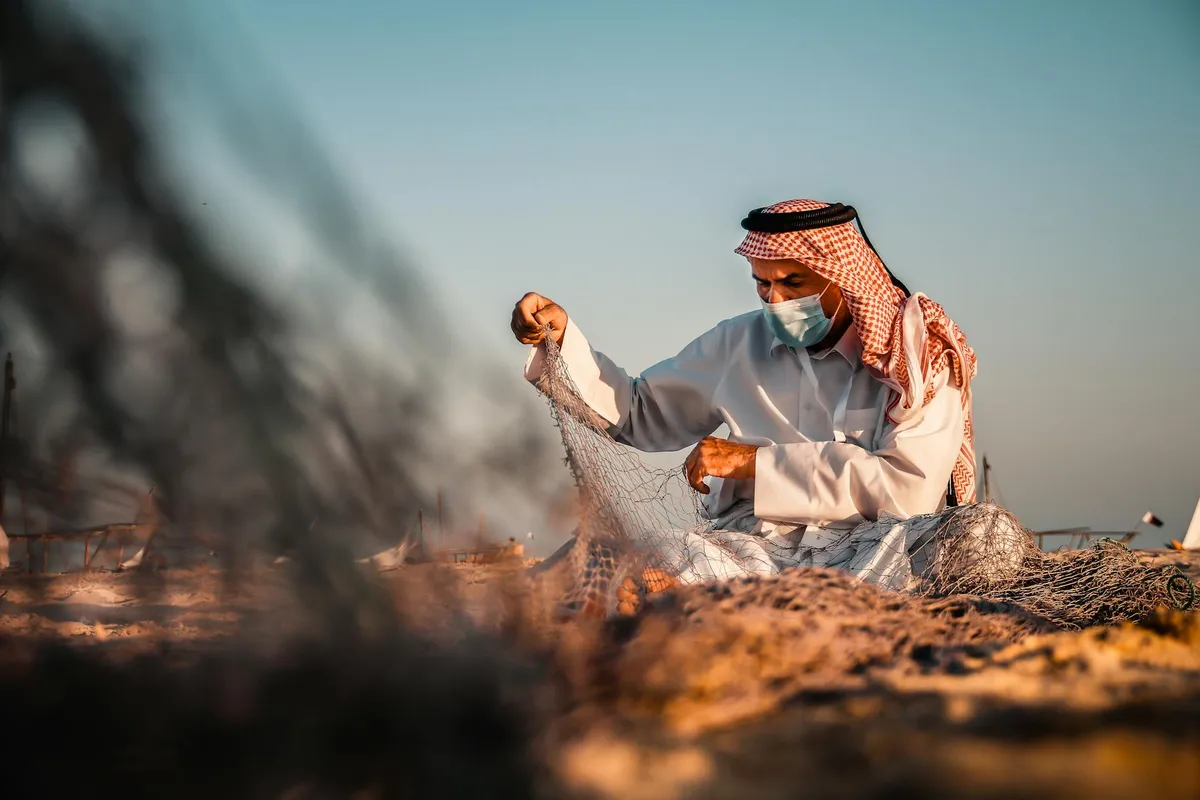
People who know Iran primarily through Tehran or other major inland cities often have inaccurate impressions of how culturally homogeneous the country is. The Persian Gulf coast — including Qeshm and the broader region — has cultural patterns that differ substantially from inland Iran in ways worth examining.
I want to think through what those patterns actually involve.
The maritime orientation
The most fundamental cultural difference is orientation toward the sea. Inland Iranian culture is oriented toward land — agriculture, mountain landscapes, continental trade routes, urban centers. Coastal culture is oriented toward water — fishing, maritime trade, island settlements, sea-based connections to other regions.
This orientation difference produces specific cultural patterns:
Time perception influenced by tides and seasons. Coastal communities organize around tidal cycles and fishing seasons in ways inland communities do not.
Food culture centered on marine resources. Persian Gulf coastal cuisine emphasizes fish, shrimp, and other marine resources in ways that distinguish it from inland Persian cuisine.
Geographic connections to non-Iranian regions. Coastal populations have historically maintained closer connections to Arabia, India, and East Africa than to inland Iran.
Trade-influenced material culture. Coastal homes, decoration, clothing, and craft traditions show influences from regional trading partners that inland regions do not show as strongly.
The maritime orientation is not surface-level but deeply influences how coastal life is structured.
The demographic complexity
Persian Gulf coastal populations are demographically more complex than inland Iranian populations. Centuries of trade have produced communities with mixed origins:
- Persian populations with long historical presence
- Arab populations from trade and migration
- African populations with origins in the East African trade
- South Asian populations with origins in Indian commerce
- Various populations with mixed heritage from intermarriage across these groups
The demographic mixing is visible in language, physical appearance, religious practices, and cultural traditions. The coastal communities are recognizably distinct from inland Iranian communities in ways that reflect this mixing.
The language complexity
Linguistic complexity reflects the demographic mixing. While Persian is the primary language and official language, coastal communities use various other languages and dialects:
- Bandari Persian — distinct dialect of Persian with substantial Arabic vocabulary influences
- Arabic — used extensively in coastal communities, particularly those with Arab heritage
- Various forms of Bandari language — local dialects that incorporate elements of multiple language families
- Urdu and Hindi — used in communities with substantial South Asian connections
- Swahili — used by communities with East African heritage
This linguistic complexity is part of normal coastal life rather than exceptional. Many coastal residents speak multiple languages and switch between them as context requires.
The religious complexity
Religious practice on the Persian Gulf coast also reflects the regional complexity. While Islam is the dominant religion, religious practice varies in ways that reflect historical influences:
- Sunni and Shia Muslim communities both have substantial presence (more religious diversity than inland Iran where Shia dominates more thoroughly)
- Specific local religious practices that reflect Indian Ocean trade influences
- Sufi traditions that have specific local expressions
- Folk religious practices that incorporate elements from multiple traditions
The religious diversity is part of normal coastal life. Different religious communities generally coexist productively, with shared cultural practices that cross religious boundaries.
The clothing and dress patterns
Coastal clothing patterns differ substantially from inland Iranian clothing. Several specific patterns:
Women's dress. Distinctive embroidered face coverings (boregheh) worn in specific coastal communities. Different patterns of fabric use and color preferences. Substantial variation between specific coastal communities.
Men's dress. White cotton clothing well-suited to the hot humid climate. Specific local versions of regional Arabic-influenced clothing.
Material patterns. Use of specific fabrics, colors, and decorations that reflect trade history with India, Africa, and Arabia.
The clothing patterns are not historical artifacts but continuing living traditions. Coastal residents continue to wear clothing patterns distinctive to their region.
The music and performance traditions
Persian Gulf coastal music is substantially different from inland Persian music. Several distinctive elements:
- African-influenced rhythmic patterns from East African trade
- Arab-influenced melodic structures from Arabian connections
- Specific instruments (various drums, plucked strings) used in particular ways
- Dance traditions that incorporate elements from multiple regional sources
- Vocal styles that differ from inland Persian vocal traditions
The music traditions continue to be performed in coastal communities. They remain part of normal cultural life rather than performances for tourists or cultural preservationists.
The food culture
Persian Gulf coastal cuisine is a distinct cuisine from inland Persian cuisine, though substantial overlap exists.
Distinctive elements:
- Fish and shellfish dominance in protein consumption
- Different spice patterns reflecting trade with India and Africa
- Tamarind and tropical ingredients not common inland
- Specific bread varieties matched to coastal life
- Tea and coffee traditions with specific local preparations
The food culture is one of the most accessible ways to understand the cultural distinctness of the coast. Visitors who eat thoughtfully across coastal communities encounter substantial cuisine that they would not encounter in inland Iranian cities.
The political and economic implications
The cultural distinctness of the Persian Gulf coast has political and economic implications that affect contemporary issues.
Coastal communities have specific economic interests (fishing, maritime trade, tourism) that may differ from inland economic priorities. Coastal communities have demographic and cultural connections to other Persian Gulf countries that inland populations do not share.
These differences are usually managed within Iranian national framework but they remain real differences that shape political and economic dynamics.
What this teaches
The Persian Gulf coast illustrates how national identities can include substantial cultural diversity within them. Iran is not a culturally homogeneous country; the country includes substantial cultural variation that reflects its geographic and historical diversity.
This pattern is true of most countries. National identity is real and consequential but typically masks substantial internal cultural variation. Understanding the variation produces better understanding of the country than treating it as homogeneous.
The Persian Gulf coast happens to be the part of Iran I write about most. Similar variations exist across other regions of Iran — the Caspian coast, the Kurdish regions, the Azerbaijani region, the Baluchi region. Each has cultural patterns distinct from inland Persian patterns.
A closing observation
The cultural patterns of the Persian Gulf coast continue. The maritime orientation continues to shape life. The demographic complexity continues to characterize communities. The languages and religions and music and food continue to be practiced in ways distinctive to the region.
This continuation is not automatic. Modernization, mass media, and economic integration produce pressure toward cultural homogenization. The continued distinctness depends on coastal communities maintaining their specific patterns through contemporary changes.
The patterns continue, for now, because coastal communities continue to find them valuable. They will continue as long as that value persists. The future of these distinctive cultural patterns depends on choices being made now by people who live within them.
The coast is its own place. The patterns are its own patterns. The continuation matters substantially for both the people living it and for the broader cultural diversity of the region.