
Qeshm has changed substantially over recent decades. Tourism infrastructure has grown. Free trade zone status has produced specific economic patterns. National infrastructure investment has improved transportation, communication, and services. Mass media has produced cultural integration with national patterns.
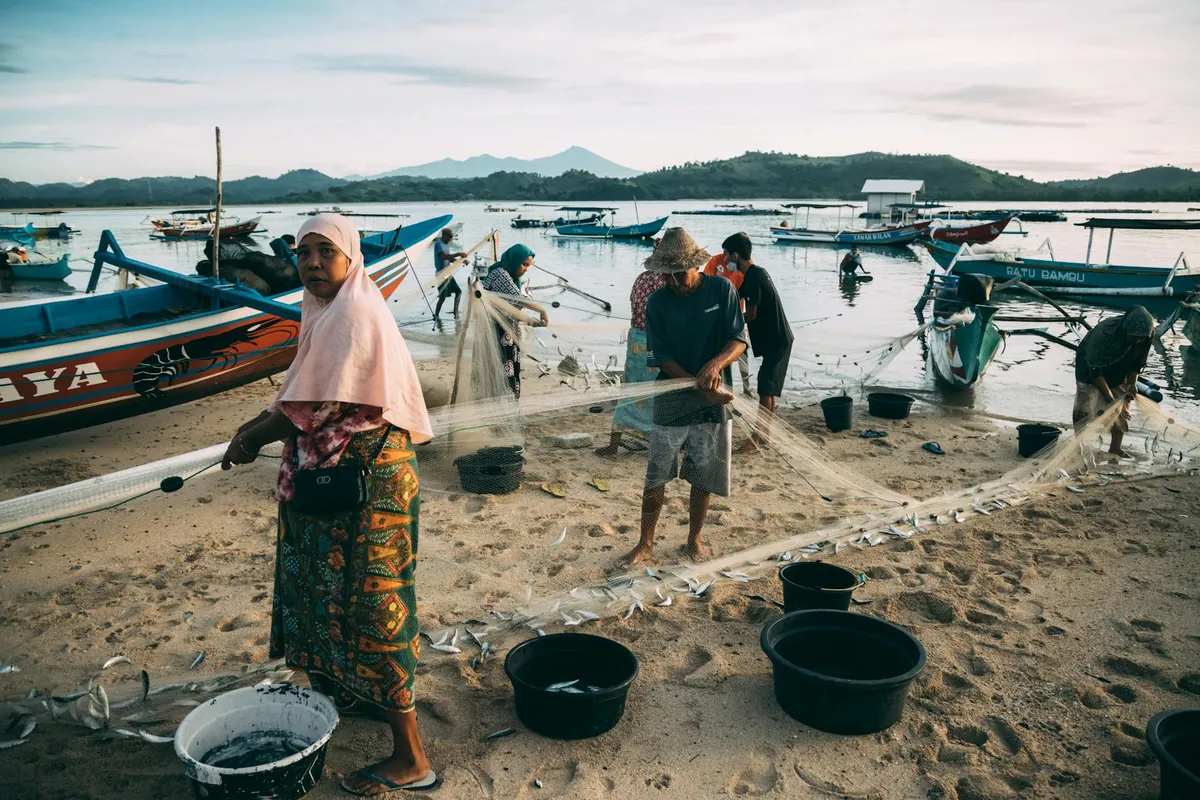
Despite these changes, traditional patterns of island life persist. The fishing communities continue to fish. The mangrove harvesting continues. The salt mining continues, in modified forms. The dhow boat building continues, though smaller than in previous generations. The seasonal rhythms of island life continue alongside the modernized economic patterns.
This persistence of traditional patterns alongside modernization is worth examining. It is not what modernization theory typically predicts. It is also not what people often expect when they visit the island for the first time.
What persists
Specific traditional patterns that continue substantially on contemporary Qeshm:
Fishing as central economic activity. Substantial portions of the island's population still derive primary or significant income from fishing. The methods have modernized somewhat (motor boats, modern netting) but the basic activity continues.
Maritime knowledge transmission. Boat handling, weather reading, navigation, fishing knowledge — all continue to be transmitted from older generations to younger ones in working contexts.
Traditional crafts. Boat building, fishing net making, salt processing, embroidery, and various other crafts continue to be practiced. Smaller scale than in previous generations but with continued knowledge transmission.
Religious and cultural practices. Local religious traditions, festivals, and cultural practices continue alongside national religious institutions. Some have shifted; many continue substantially as they have for generations.
Family and community structures. Multi-generational households remain common. Extended family obligations continue to structure daily life. Community-level organization remains substantial.
Linguistic distinctiveness. Bandari Persian dialect continues to be the primary language of daily life despite increased exposure to standard Persian through media and education.
These persistences are not the result of preservation efforts. They are the result of the patterns continuing to function for the people living them.
Why traditional patterns persist
Several factors explain the persistence of traditional patterns alongside modernization:
Economic functionality. Many traditional patterns continue to be economically functional. Fishing is still profitable. Traditional crafts still produce income. The patterns persist because they work, not because they are preserved.
Social functionality. Traditional family and community structures continue to provide social support that modern alternatives have not replaced. The patterns persist because they serve functions that have not been adequately replaced.
Geographic isolation. Despite improved transportation, Qeshm remains geographically separated from mainland Iran. The separation produces conditions that support continued distinctiveness.
Cultural commitment. Many island residents maintain conscious commitment to traditional patterns despite exposure to modern alternatives. The persistence reflects active choice, not just inertia.
Adaptive integration. Traditional patterns have integrated with modern elements rather than being replaced by them. The integration produces hybrid patterns that combine elements of both.
These factors together produce the persistence pattern observable across contemporary Qeshm.
The integrated pattern
What contemporary Qeshm actually looks like is not a binary between "traditional" and "modern" but an integrated pattern that combines elements of both:
- Fishing communities use modern boats with traditional knowledge
- Modern stores sell traditional goods alongside contemporary products
- Traditional crafts produce items for both local use and tourism markets
- Religious practices combine traditional forms with contemporary expressions
- Family structures incorporate elements of both traditional patterns and modern circumstances
This integration is not neat or fully resolved. It produces specific tensions and adjustments. But it also produces sustainable patterns that work for the communities involved.
What this teaches about modernization
The Qeshm experience complicates standard modernization narratives that predict traditional patterns will be replaced by modern ones.
The actual pattern observable here is more nuanced. Traditional patterns persist where they continue to function. Modern elements are integrated where they add value. The result is hybrid patterns rather than complete replacement.
This pattern appears in many traditional communities globally that have integrated with modern economies and infrastructure. The "traditional vs modern" framing oversimplifies what actually happens. The reality is more interesting and more mixed.
The contemporary pressures
Despite the persistence of traditional patterns, real pressures continue to affect island life:
Tourism pressure. Substantial tourism produces both economic benefits and cultural pressures. Some traditional patterns are commodified for tourist consumption in ways that change their meaning.
Generational change. Younger generations have different priorities and exposures than older generations. Some traditional patterns face transmission challenges as younger people choose different paths.
Economic integration. Free trade zone status and broader economic integration produce pressures toward conformity with broader economic patterns.
Environmental change. Climate change, fishing pressure, and pollution affect the natural systems that traditional patterns depend on.
Media saturation. Mass media exposure to national and international patterns produces cultural homogenization pressure.
The persistence of traditional patterns is not guaranteed. It requires active maintenance against these pressures.
What can be done
For people who value the persistence of traditional patterns alongside modernization:
- Support the economic activities (fishing, traditional crafts, etc.) that sustain traditional patterns
- Document traditional knowledge before transmission gaps emerge
- Resist the commodification that destroys patterns by transforming them
- Engage with traditional patterns as living practices rather than museum exhibits
- Support institutions that maintain cultural transmission
None of these alone sustains traditional patterns. Together they support the conditions under which patterns continue.
The broader pattern
The Qeshm experience is one example of a broader pattern. Many traditional communities globally have integrated with modern economies and infrastructure while maintaining substantial traditional patterns.
The integration is not always successful. Some communities have lost traditional patterns substantially. Others have maintained them substantially. The factors that distinguish successful integration from substantial loss are worth understanding.
Communities that maintain traditional patterns most successfully tend to share characteristics:
- Economic functionality of traditional patterns
- Active cultural commitment from community members
- Adaptive integration rather than rigid preservation
- Sustained transmission across generations
- Institutional support for continued practice
These characteristics can be cultivated. They are not just inherent to specific communities.
A closing observation
I find the persistence of traditional patterns on Qeshm interesting partly because it represents a particular kind of cultural achievement. Modernization can be integrated without complete cultural loss when communities approach it deliberately rather than passively.
The fishing communities continue to fish. The boat builders continue to build boats. The embroiderers continue to embroider. The languages continue to be spoken. The food traditions continue to be practiced. The festivals continue to be celebrated.
None of this is automatic. All of it depends on choices being made by community members about what to maintain and how to integrate modern elements without losing traditional ones.
The patterns continue, where they continue, because people continue to find value in maintaining them. The continuation matters substantially for both the communities living it and for the broader cultural diversity of the region.
The boats go out. The nets come back full. The patterns persist. The work of cultural continuation goes on, as it has gone on for generations.



