
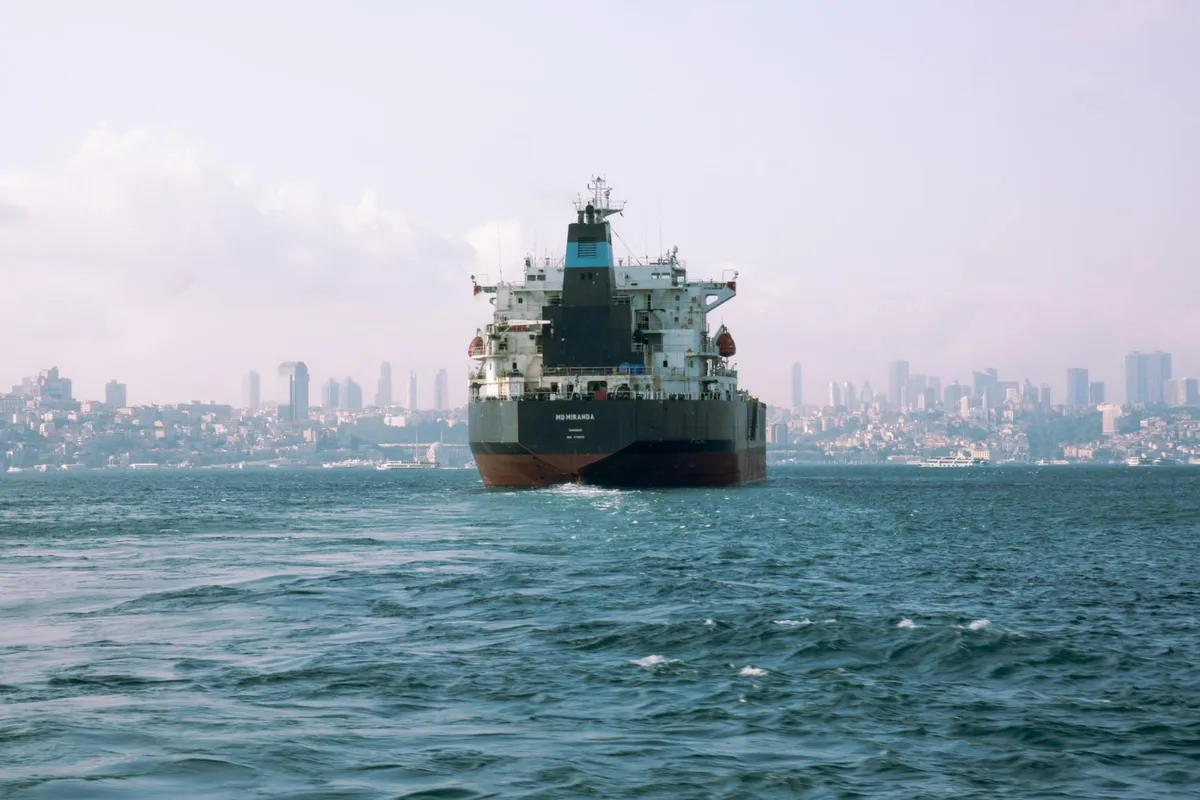
The Strait of Hormuz is approximately 33 kilometers wide at its narrowest point, between the southern tip of Iran and the northern coast of Oman. Through this narrow passage flows approximately a fifth of all globally traded petroleum, plus substantial portions of liquefied natural gas, manufactured goods, and food. The contemporary strategic importance of the strait is well-known.
What is less commonly recognized is the historical depth of this importance. The Strait of Hormuz has been a critical trade route for over two thousand years. The contemporary attention reflects continuity with a long history rather than novel strategic significance.
The geography of the strait
The Strait of Hormuz connects the Persian Gulf to the Gulf of Oman, which then opens to the Arabian Sea and the broader Indian Ocean. The connection is geographically narrow but commercially essential. Without passage through Hormuz, Persian Gulf trade with the broader world becomes impossible.
The strait has natural deepwater channels that can accommodate large ships. The Iranian coast is mountainous and includes various islands (Qeshm, Hengam, Larak, Hormuz Island itself) that have historically provided strategic positions for monitoring or controlling traffic. The Omani coast offers different topography but similar strategic positioning.
The geography has remained essentially constant across millennia. Empires and nations have changed; the geography that makes Hormuz important has not.
The historical depth
Trade through the Strait of Hormuz is documented in records going back over two thousand years. Specific phases:
Pre-Islamic period. Achaemenid Persian sea trade with India, Arabia, and Africa moved through the strait. Early Greek and Roman trade with India during the early centuries CE used the same routes.
Early Islamic period (7th-10th centuries). The Abbasid Caliphate developed substantial maritime commerce that depended on Hormuz transit. The port of Siraf on the Iranian coast was a major commercial center connecting Arab traders to Indian and Chinese commerce.
Hormuz Kingdom (10th-16th centuries). The Kingdom of Hormuz controlled trade through the strait for several centuries. The kingdom's commercial wealth made it among the wealthiest powers in the broader region.
Portuguese period (16th-17th centuries). Portuguese fleets seized control of Hormuz Island in 1507 to dominate Persian Gulf trade. The Portuguese maintained substantial control of strait commerce for over a century.
British period (18th-20th centuries). British naval power controlled strait commerce throughout most of this period, integrating it into the broader British imperial trading system.
Contemporary period (1971-present). After British withdrawal, the strait's strategic importance has been managed through various international arrangements and continues to be central to global energy markets.
Across all these periods, the strait has functioned as a critical commercial chokepoint. The specific powers controlling or contesting it have changed; the strait's commercial importance has not.
What the historical trade actually carried
The cargoes moving through the strait have varied substantially across centuries:
Ancient trade. Spices, textiles, precious stones, slaves, manufactured goods, gold, silver. The Persian Gulf was a major component of the broader Indian Ocean trading system that connected Mediterranean, African, Indian, and Chinese commerce.
Medieval trade. Continued spice and textile trade. Substantial pearl trade from Persian Gulf pearl banks. Coffee from Yemen. Various agricultural and manufactured goods.
Early modern trade. Continued spice trade. Increasing European involvement (Portuguese, Dutch, English). Growth of commodity trade as European industrial demand expanded.
20th century trade. Petroleum trade emerged in the early 20th century and expanded enormously after World War II. By the late 20th century, petroleum dominated Hormuz commerce.
Contemporary trade. Continued dominance of petroleum and natural gas. Substantial container traffic for manufactured goods. Various other commodities.
The continuity of strait commerce across two millennia of changing cargoes is striking. The geography that made commerce flow through Hormuz has remained constant despite enormous changes in what commerce involved.
The strategic patterns
Several patterns recur across the long history of Hormuz strategic importance:
Powers that control the strait gain substantial commercial wealth. The Hormuz Kingdom, the Portuguese, the British — all derived substantial wealth from controlling strait commerce.
Powers that depend on strait commerce develop substantial interest in its security. Persia historically. Britain throughout its imperial period. The United States and other major economies in the contemporary period.
Conflicts in the broader region affect strait commerce. Wars, political instabilities, and regime changes in Persian Gulf states have repeatedly affected strait operations.
Insurance and shipping arrangements adjust to risk levels. Both historical and contemporary strait commerce has involved sophisticated risk management as conditions change.
These patterns persist across centuries and across enormous changes in technology, politics, and commerce. The geography produces persistent strategic dynamics regardless of who specifically is involved.
The contemporary attention
Contemporary news coverage of the Strait of Hormuz typically emphasizes its current importance to global energy markets and the various contemporary tensions affecting strait operations. This coverage is accurate but often misses the historical depth.
The "Strait of Hormuz" is not primarily a contemporary strategic concept; it is a geographic feature that has been strategically important for over two thousand years. The current concerns are continuations of patterns that have recurred across many historical periods.
Understanding this depth helps contextualize current events. The strait is not new in its strategic importance; the specific cargoes and contesting powers are new. The basic dynamic of a critical commercial chokepoint that produces sustained strategic interest is ancient.
What this teaches
The Strait of Hormuz illustrates how geography can produce remarkably persistent strategic patterns across enormous changes in human civilization. The same narrow passage that mattered in 200 BCE matters in 2026 CE. The matter has been continuous throughout the intervening time.
This persistence is worth recognizing. Many contemporary geopolitical concerns are presented as novel problems requiring novel solutions. The Strait of Hormuz illustrates how some strategic concerns are essentially permanent features of geography that humans must continuously manage rather than problems that can be definitively solved.
The strait will continue to be important as long as commerce flows through it. That commerce has flowed for over two thousand years and will likely continue flowing for as long as the global economy depends on Persian Gulf resources.
A closing observation
If you stand on the high ground of Qeshm Island and look across the strait, you see what countless previous generations of inhabitants have seen — vessels of various kinds moving through the narrow waters between continents. The vessels have changed across centuries; the basic scene has not.
This continuity is, in some sense, what makes Qeshm what it is. The island sits beside one of the great commercial passages of human civilization. It has watched commerce flow through these waters for over two thousand years. It will continue to watch as long as the strait remains commercially central.
The vessels move. The commerce flows. The geography remains. The strait continues to be what it has been throughout recorded history — a critical passage through which substantial portions of global commerce pass.



